Concrete might not sound like the most exciting material, but it’s the unsung hero of DIY projects. With a little creativity and a dash of elbow grease, anyone can transform dull concrete into stunning home decor or functional outdoor features. Imagine crafting stylish planters, chic coasters, or even a sleek garden bench—all from a material that’s as tough as it is versatile.
Whether you’re a seasoned DIYer or just looking to dabble, concrete projects offer endless possibilities. Plus, working with concrete gives you the satisfaction of creating something solid and enduring—unlike that banana bread you attempted last week. So grab your mixing bowl and get ready to unleash your inner architect. With concrete, the only limit is your imagination (and maybe your patience).
Concrete DIY Projects
Concrete offers immense potential for creative projects around the home and garden. Various DIYers use concrete to craft unique items that combine beauty and functionality.
Benefits of Concrete for DIY
Concrete provides numerous advantages for DIY projects. It’s cost-effective and durable, making it a popular choice for creating long-lasting items. Its versatility allows for a wide range of projects, from decorative pieces to functional outdoor furniture. Another benefit involves the ease of customization; various molds and finishes help achieve distinct looks. Additionally, concrete requires minimal maintenance, ensuring that creations maintain their appeal over time.
Popularity and Trends
The popularity of concrete DIY projects continues to rise. Homeowners and enthusiasts embrace its adaptability in various design styles, including modern and rustic aesthetics. Recently, trends have emerged around concrete planters and tabletops, showcasing their decorative potential. Succulent and indoor gardening projects emphasize the use of concrete as a stylish element. Social media platforms showcase innovative designs, inspiring DIYers to experiment with techniques. Current trends focus on eco-friendly practices, with many selecting recycled materials to blend with concrete.
Essential Tools and Materials
Selecting the right tools and materials is vital for successful concrete DIY projects. Here’s what to consider for your next endeavor.
Cutting and Mixing Tools
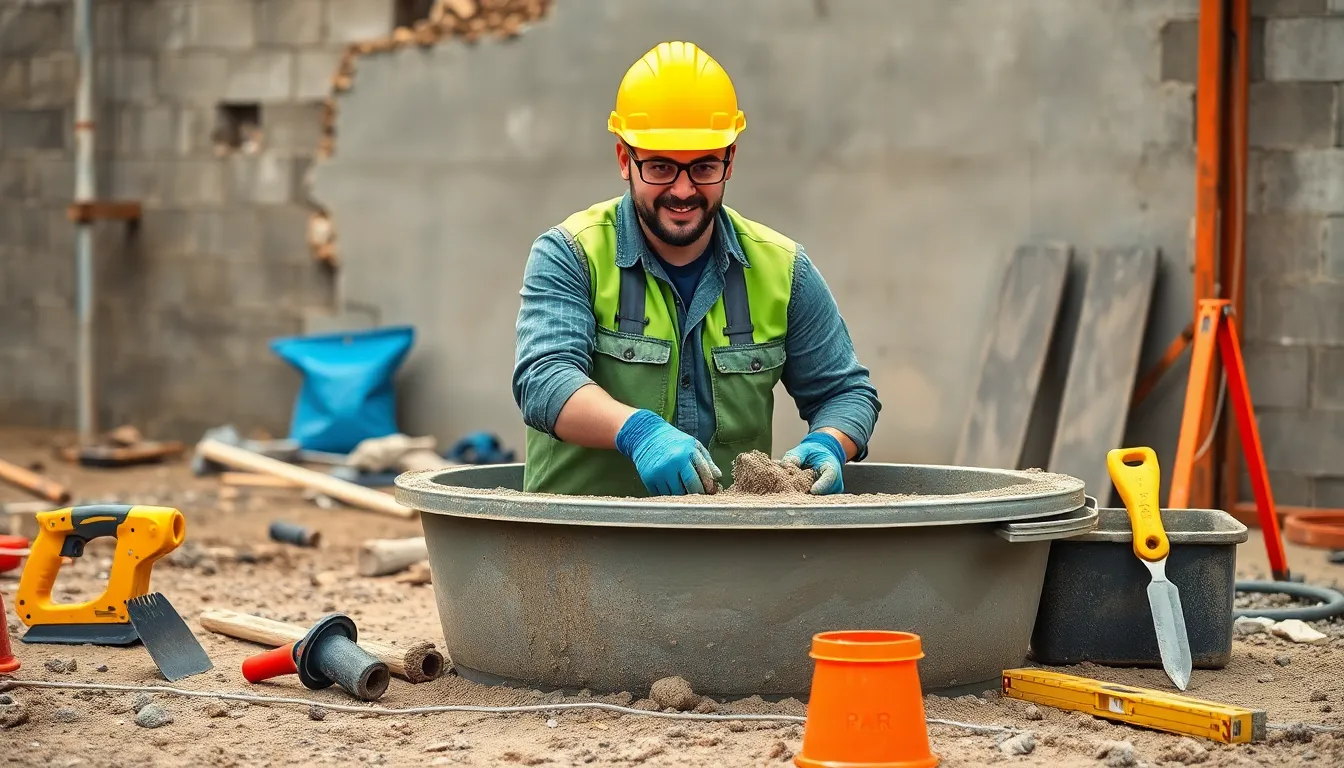
Investing in quality cutting and mixing tools facilitates precise works. A concrete saw enables clean cuts for projects like pavers. Choosing a mixing tub allows for proper blending of materials, ensuring a uniform consistency. Hand tools, such as trowels and spades, provide essential control for shaping and applying the mixture. A power drill with a mixing attachment makes the process quicker. Utilizing a level helps achieve even surfaces. Each tool plays a significant role in the project’s execution, improving results.
Safety Gear and Equipment
Prioritizing safety gear and equipment enhances protection during the DIY process. Safety glasses shield eyes from flying debris, while a dust mask prevents inhalation of harmful particles. Using gloves safeguards hands from rough surfaces and chemicals. A hard hat should be worn in areas where falling objects pose a risk. Steel-toed boots provide foot protection against heavy materials. Hearing protection becomes crucial when using loud equipment. By equipping oneself with proper safety items, the DIY experience remains secure and enjoyable.
Simple Concrete DIY Projects for Beginners
Concrete projects offer an easy entry point for beginners. These projects encourage creativity while providing functional and decorative items.
Concrete Planters
Creating concrete planters involves minimal materials and tools. First, select a suitable mold, like a plastic container, for the planter’s shape. Mixing concrete requires a concrete mix and water in the appropriate ratio, usually one part water to five parts mix. Pour the mixture into the mold, ensuring proper distribution. Allow time for curing, typically 24 to 48 hours. A simple drainage hole at the bottom prevents overwatering. Painted or stained finishes can enhance the planter’s aesthetic appeal, matching various decor styles. Such planters serve as a great way to showcase plants while custom-fitting to outdoor or indoor spaces.
Decorative Concrete Coasters
Making decorative concrete coasters is both simple and rewarding. Use small molds, such as silicone baking trays, for the coaster shapes. Combine a concrete mix with water, following the manufacturer’s instructions to ensure proper consistency. Pour the mixture into the molds and gently tap them to eliminate air bubbles. After 24 hours, remove the coasters and allow them to cure for an additional few days. Once fully set, a sealant can protect the surface from moisture. Adding paint or engravings boosts uniqueness, making them perfect as gifts or personal items. These coasters not only serve a practical purpose but also add a personalized touch to any table setting.
Intermediate Concrete DIY Projects
Concrete projects become more intricate while still maintaining accessibility. These intermediate DIYs provide opportunities to enhance outdoor spaces and home interiors creatively.
Garden Stepping Stones
Garden stepping stones offer practical and decorative elements for outdoor spaces. He can create these stones using various molds, including simple circular or custom-shaped forms. Mixing concrete with the desired color adds a personal touch. Decorative elements like pebbles or glass pieces can be pressed into the surface before the concrete sets. The finished stones not only serve as pathways but also elevate the garden’s aesthetics with unique designs. Allow adequate time for curing to ensure durability in varying weather conditions.
Concrete Furniture
Concrete furniture introduces industrial chic to any home. It becomes possible to craft pieces like benches and side tables with minimal effort. He can use molds to shape tabletops and seating surfaces precisely. Incorporating rebar reinforces the structural integrity, making the furniture sturdy. Paint or seal the finished surfaces for a refined look. Pairing concrete with wood or metal elements can further enhance the visual appeal. This blend of materials ensures that the furniture remains functional while standing out as a focal point in any room or patio.
Advanced Concrete DIY Projects
Advanced concrete DIY projects offer unique ways to enhance both indoor and outdoor spaces with stylish and durable creations. These projects require a deeper understanding of concrete techniques, but they result in impressive, functional pieces.
Concrete Countertops
Concrete countertops serve as a striking centerpiece in kitchens and bathrooms. They allow for extensive customization in color, texture, and shape. Mixing the concrete with additives can yield unique finishes, such as polished or matte surfaces. Installing them often involves building a form to hold the wet material, followed by a careful pouring process. Curing time plays a critical role in achieving the desired strength and durability. After curing, sealing the countertop protects against stains and moisture, ensuring longevity. Homeowners appreciate the ability to design countertops that match their aesthetic preferences and functional needs.
DIY Concrete Fire Pits
DIY concrete fire pits create inviting outdoor spaces for gatherings. Designing them varies in complexity, from basic circular shapes to more elaborate geometric forms. Constructing a fire pit requires selecting suitable fire-rated concrete mixes to ensure safety. First, builders should outline the desired shape with stakes and string, then pour concrete into molds to form the base. Adding decorative elements like stones or glass enhances visual appeal. After the structure sets, more steps involve installing a fire ring and ensuring proper ventilation. With the right care, concrete fire pits become a focal point for outdoor entertainment, providing warmth and ambiance.
Tips for Successful Concrete DIY
Achieving success in concrete DIY projects hinges on understanding key techniques and practices. Following proper methods can significantly enhance the outcome of projects.
Proper Mixing Techniques
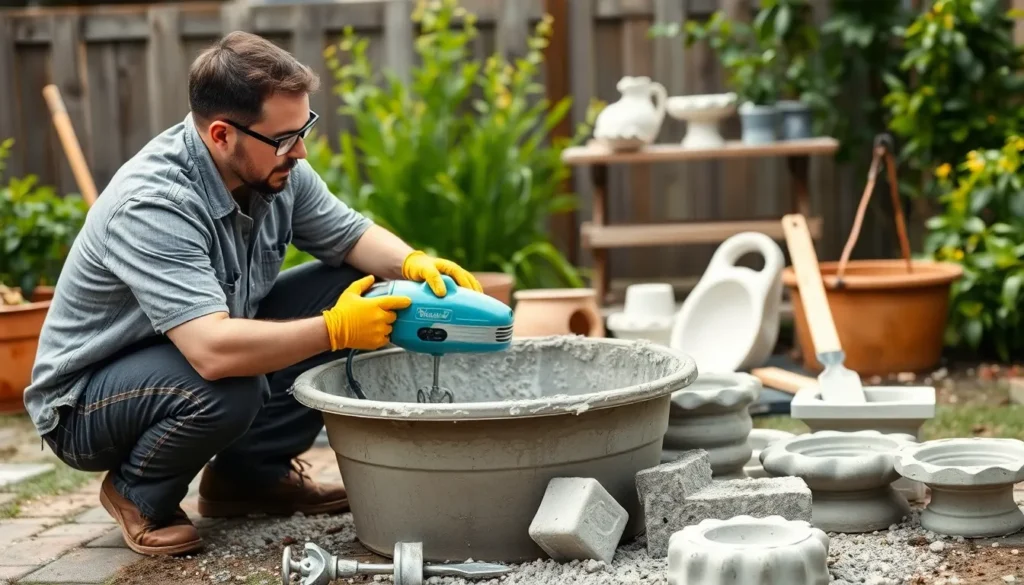
Mixing concrete properly plays a critical role in project integrity. Start with dry concrete ingredients and water in a mixing tub. Stir gradually to ensure an even consistency. Aim for a thick, oatmeal-like texture that holds shape. Avoid adding too much water, as excessive moisture weakens the final product. Using a concrete mixer can streamline this process, reducing manual effort. Be sure to prepare enough concrete for the project to minimize waste and ensure a cohesive design. Lastly, always follow the manufacturer’s guidelines for specific ratios of ingredients.
Curing and Finishing Tips
Curing concrete correctly protects it during the hardening process. Keep concrete moist for at least seven days, using water or a curing compound for optimal results. This step prevents cracking and enhances strength. After curing, focus on finishing techniques to improve aesthetics. Sanding surfaces can create a smooth finish, while applying sealants enhances durability. Consider using specific decorative treatments for added flair. For outdoor projects, selecting finishes that resist weathering is crucial. With attention to detail during curing and finishing, DIYers can achieve professional-looking results with concrete.
Conclusion
Embracing concrete for DIY projects opens up a world of possibilities. With its durability and adaptability, it’s an ideal choice for both beginners and seasoned crafters. Whether creating functional garden items or stunning home decor, the journey of working with concrete can be both fulfilling and enjoyable.
As trends shift toward eco-friendly practices and personalized designs, DIY enthusiasts can take pride in their unique creations. Armed with the right tools and safety gear, anyone can transform their spaces with concrete. So why not dive in and unleash creativity? The potential for beautiful and functional concrete projects awaits.